2026-10-28 · David Hale
Scheduling Routine Maintenance Around Cape Coral's Busy Tourist Season
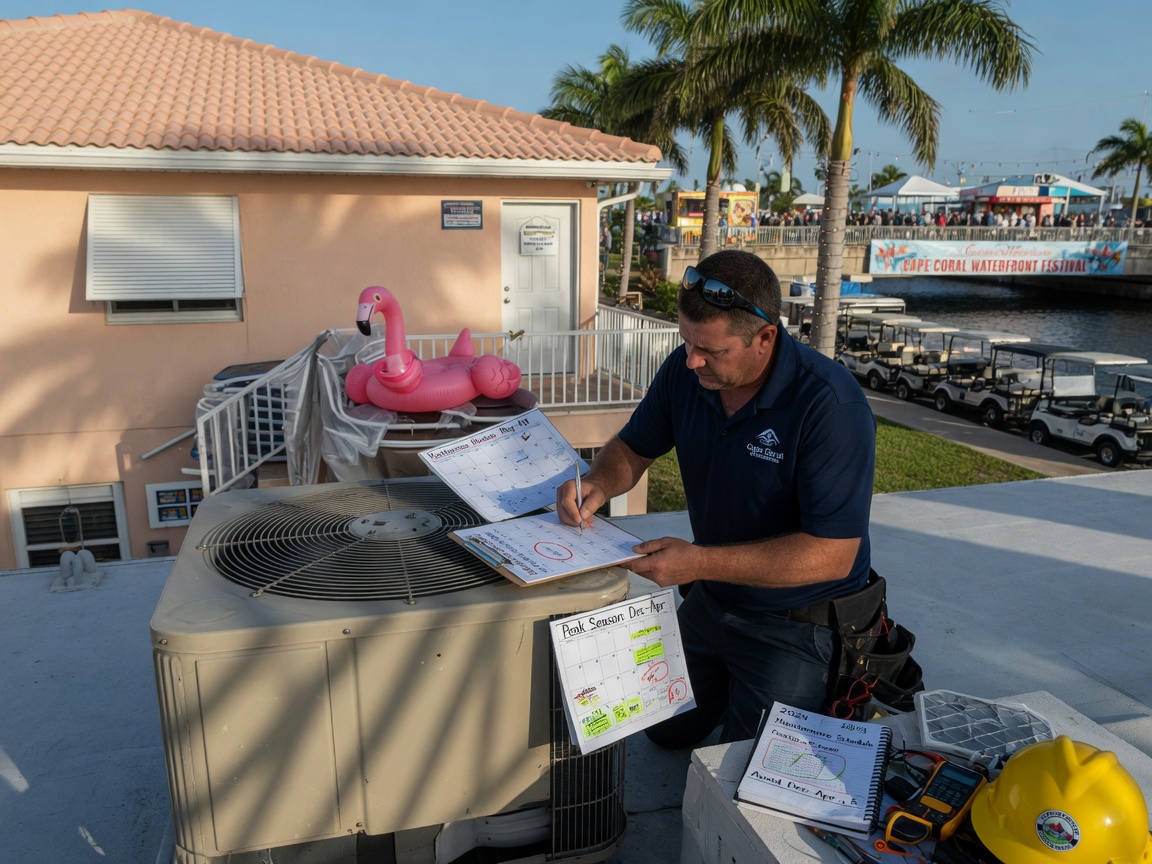
Schedule routine maintenance for Cape Coral HVAC systems in the shoulder months of April-May or September-October to sidestep the November-March tourist rush that drives up call volume across Lee County. This window lets technicians complete thorough inspections before summer humidity peaks or winter dry spells stress equipment in neighborhoods like Cape Coral Isles and Burnt Store. Homeowners near the Cape Coral Yacht Club or Four Freedoms Park often see faster response times outside peak visitor months when rentals and short-term properties increase system runtime.
Understanding Cape Coral Tourist Season Impacts on HVAC Demand
Winter brings dry conditions that still require reliable heating and dehumidification for visitors flocking to Sun Splash Family Waterpark and downtown attractions, pushing many units past normal operating hours. In Lee County, older housing stock from the 1970s and 1980s in areas like Cape Coral Isles experiences more frequent filter clogs and coil issues when guest turnover rises. Technicians report that systems serving properties near Fort Myers and Sanibel see 30-40% higher service requests from November onward, making advance booking essential to maintain consistent indoor comfort without last-minute delays.
Best Times to Book Preventive Maintenance Visits
Early weekday mornings between 8am and 10am during shoulder seasons work well for residents in Burnt Store because traffic from North Fort Myers stays lighter and outdoor condenser checks finish before afternoon heat builds. Grace Heating & Cooling operates Mon–Fri 8am–6pm and Sat 9am–2pm, allowing flexible slots that fit around local work schedules without overlapping peak tourist check-in times. Booking at least four weeks ahead ensures access to full diagnostic checks on refrigerant levels and electrical connections before the next humidity spike arrives.
How Local Climate Patterns Affect Maintenance Scheduling
Tropical summers with high humidity accelerate mold risks inside air handlers, so a spring tune-up catches drainage problems before they worsen during guest-heavy months. Dry winters reduce heating loads but increase dust circulation in homes near the water, requiring fresh filter changes and coil cleaning to keep systems efficient. Properties in Downtown Cape Coral often need extra attention to condensate lines because of the area's flat terrain and occasional heavy rains that follow tourist season.
Routine checks also address salt air corrosion on outdoor units common along the waterfront near the Cape Coral Yacht Club, extending equipment life in these conditions. Preventive Maintenance visits include these location-specific steps to prevent breakdowns when visitor demand spikes again.
Preparing Your System Before Peak Visitor Months
Homeowners should clear landscaping debris from condensers in late summer to avoid restricted airflow during the busy winter period, a step detailed further in related guidance on protecting outdoor units. Scheduling a full system evaluation in September catches wear from the prior humid months before November arrivals increase runtime. This approach keeps indoor air quality stable in older Lee County homes where ductwork may have settled over decades.
Residents near Sanibel and North Fort Myers benefit from the same timing because cross-county service routes stay shorter outside tourist traffic. Preventing Mold Growth Inside Air Handlers In Humid Florida Homes offers additional steps that pair well with these seasonal visits. Protecting Outdoor Condenser Units From Landscaping Debris In Cape Coral provides practical tips for waterfront properties that see extra foot traffic during events at Four Freedoms Park.