2026-09-05 · Carlos Mendoza
Protecting Outdoor Condenser Units From Landscaping Debris In Cape Coral
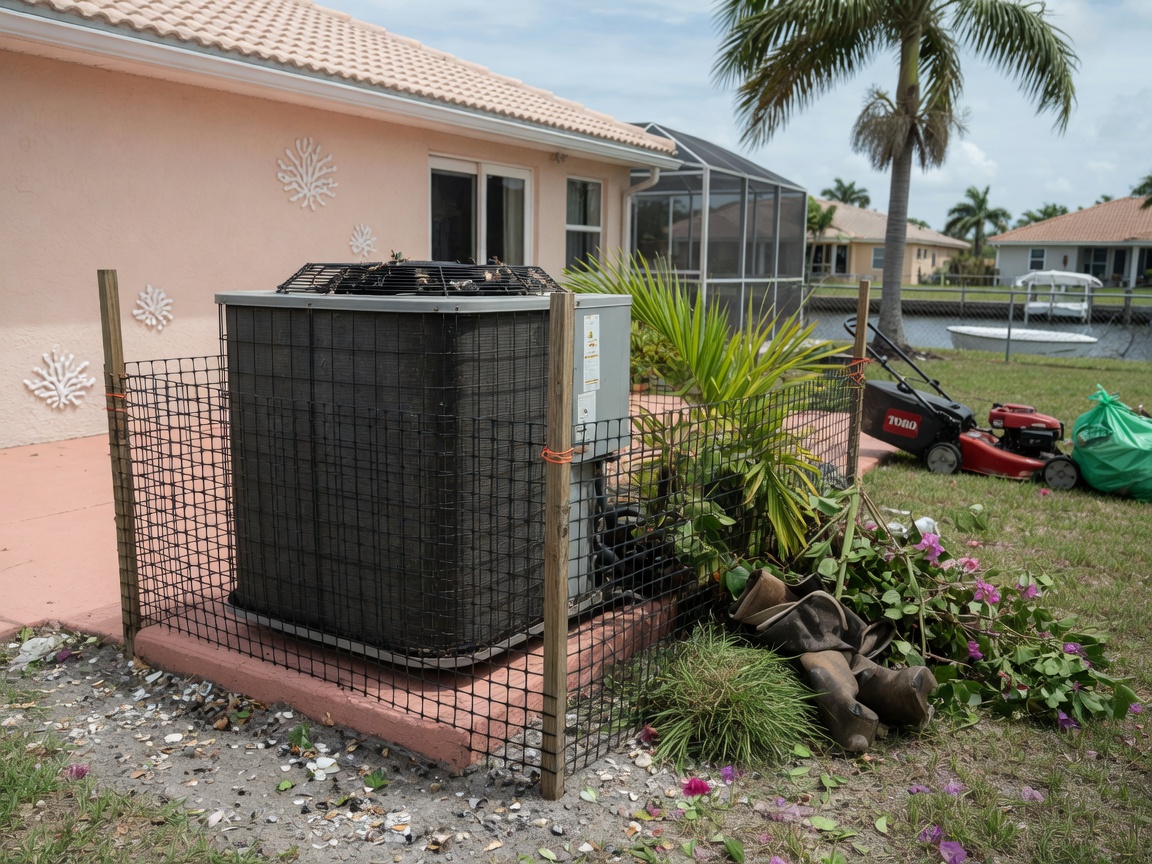
Clearing palm fronds, oak leaves, and grass clippings from around outdoor condenser units every 2–4 weeks during summer growth periods maintains proper airflow in Cape Coral homes. Tropical humidity accelerates plant growth in yards throughout Downtown Cape Coral, Cape Coral Isles, and Burnt Store, so debris reaches coil fins faster than in drier regions. Homes here sit on flat lots with sandy soil that supports dense landscaping near the units, increasing contact with falling material. Without regular removal, restricted airflow forces the compressor to run longer and raises indoor temperatures during peak afternoon heat.
Common Debris Sources Around Local Homes
Single-family homes in Cape Coral Isles often place condensers within 3–5 feet of palm clusters and hibiscus beds that shed year-round. Burnt Store properties near the water see extra salt-laden fronds carried by breezes from the Cape Coral Yacht Club area. Dry winter months still drop needles from Australian pines and live oaks common along Four Freedoms Park edges. These materials collect on the coil face and under the unit base, trapping moisture that promotes corrosion on copper lines. Sandy Lee County soil allows roots to push closer to slabs, so new growth appears within weeks after any trimming.
How Debris Reduces Condenser Efficiency
Leaves and fronds block 30–50 % of coil surface area within one month of unchecked growth, cutting heat rejection and raising head pressure. In humid summers this forces the system to cycle longer, directly contributing to the energy spikes detailed in Understanding Energy Use Spikes During Peak Cooling Months In Cape Coral. Restricted airflow also pulls warmer air across the coils, shortening compressor life by 2–3 years on average. Sand mixed with organic debris scratches fins during wind events common near Sun Splash Family Waterpark, creating permanent airflow paths that lower SEER performance.
Installing Simple Physical Barriers
A 3-foot-tall vinyl or composite screen placed 18–24 inches from the unit sides stops most fronds while still allowing 24-inch service clearance required by code. Anchor the screen base in concrete footers set 12 inches deep to resist 40–50 mph gusts that hit Cape Coral during summer storms. Use stainless-steel hardware to avoid rust stains on stucco walls typical of 1980s–2000s construction in the area. Leave the top open so hot discharge air escapes upward rather than recirculating back into the intake.
Seasonal Clearing and Inspection Routine
Begin weekly checks in May when humidity climbs above 70 % and continue through October when growth slows. Use a leaf blower on low setting from 4–6 feet away to avoid bending fins, then follow with a soft-bristle brush on the coil face. After any landscape service in North Fort Myers or Sanibel-adjacent yards, inspect within 48 hours because crews often blow debris toward neighboring lots. Record dates and photos so patterns emerge for each property’s specific plantings.
Linking Debris Control to Broader System Care
Keeping the condenser clear supports the same goals as Preventive Maintenance visits that include coil cleaning and refrigerant checks. Blocked units also increase the chance of evaporator-coil icing that later requires attention described in Signs Your Evaporator Coil Needs Cleaning After Rainy Season. Homeowners who combine debris removal with these steps report steadier indoor humidity control during the wettest months.