2026-09-05 · Carlos Mendoza
Preparing Your Ac System For Cape Coral Hurricane Season
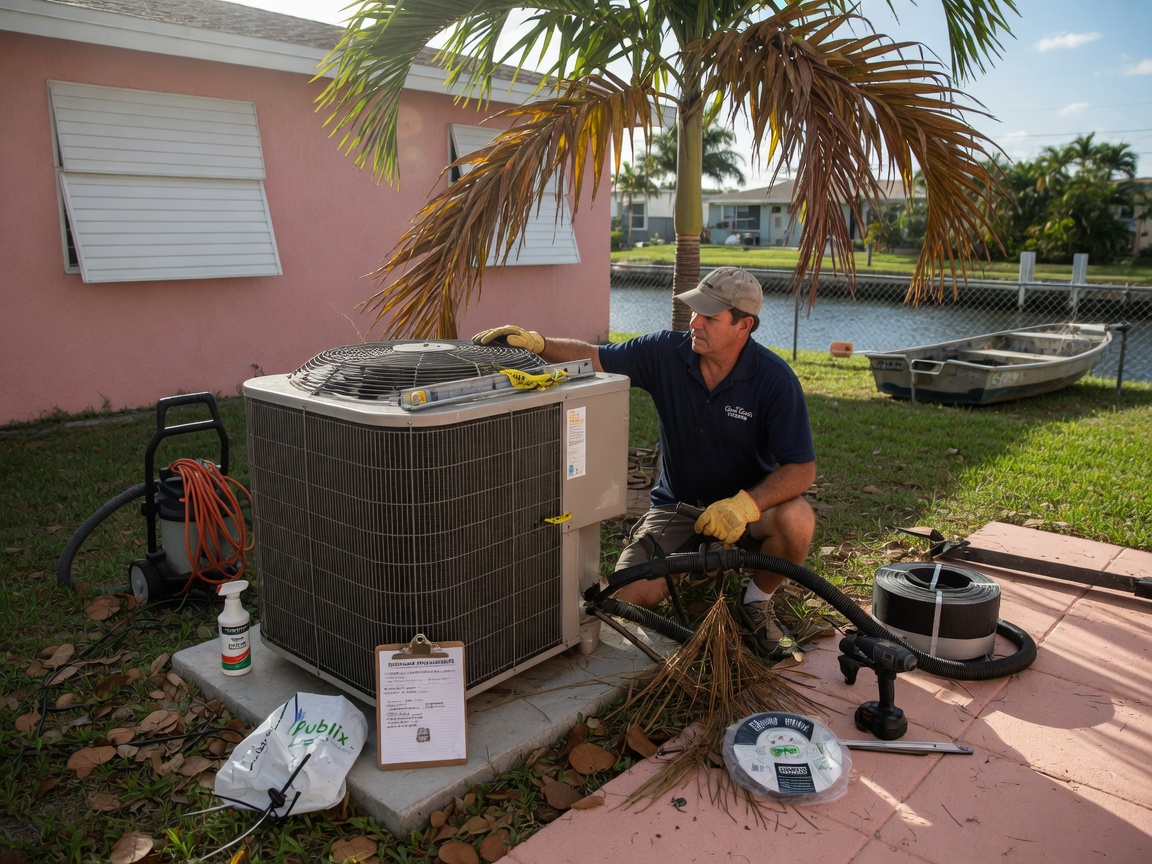
Begin preparations 4-6 weeks before June by securing the outdoor condenser against 70-plus mph winds and clearing drainage paths around the unit to handle the heavy rainfall typical in Lee County.
Understanding Local Hurricane Impacts on AC Equipment
Cape Coral homes in Downtown Cape Coral and Cape Coral Isles sit near canals that channel storm surge and standing water directly toward ground-level condensers. Tropical humidity keeps systems running near capacity through summer, so any debris impact or power surge during a storm quickly leads to compressor strain once electricity returns. Burnt Store properties often face open exposure to Gulf winds that can bend fins or topple unsecured units. These conditions differ from inland Fort Myers setups where elevation reduces flood exposure. Power outages lasting days also allow indoor coils to stay damp, raising mold risk once cooling restarts. Checking refrigerant lines for vibration damage before storms hit prevents leaks that appear only after the event.
Pre-Season Inspection and Maintenance Tasks
Walk the property and note any low spots where water pools near the pad. Trim branches within 10 feet of the unit to reduce wind-driven debris. Remove the top panel and clear leaves or pine needles from the fan blades and coil. Test the disconnect switch and confirm the float switch on the indoor air handler shuts the system down if condensate backs up. In older Cape Coral construction common along Burnt Store Road, ductwork often runs through attics with minimal insulation, so verify seals remain tight before humidity spikes. Schedule these checks during the drier winter months when access is easier and demand is lower. Link these steps to ongoing care by reviewing the full checklist at Preventive Maintenance.
Securing the Outdoor Unit Against Wind and Water
Anchor the condenser to its pad with hurricane straps rated for 150 mph gusts, a common requirement after past Lee County storms. Elevate the unit on a 4-6 inch composite pad if the lot slopes toward a canal. Install a wind-rated disconnect cover to keep water out of electrical connections. In Cape Coral Isles, where lots sit close to tidal influence, add a secondary float switch on the condensate line to stop the system before water reaches the blower motor. Avoid covering the unit with tarps that trap moisture and promote corrosion during the dry winter that follows hurricane season. These measures protect the $3,000-6,000 replacement cost typical for a 3-4 ton residential system serving 1,800 square foot homes in the area.
Handling Power Restoration and Post-Storm Checks
After an outage, wait 30 minutes before restoring power to allow capacitors to discharge safely. Inspect the outdoor coil for bent fins or shifted refrigerant lines before running the system. Clear any standing water from the condensate drain to prevent immediate overflow. Homes near Sun Splash Family Waterpark or Four Freedoms Park often share the same aging electrical panels that trip under sudden restart loads, so reset breakers one at a time. Continue monitoring energy use patterns once cooling resumes by tracking the guidance at Understanding Energy Use Spikes During Peak Cooling Months In Cape Coral. If unusual noises or weak airflow appear, reference the steps in What To Inspect After A Power Outage In Southwest Florida before calling for service.