2026-09-05 · Carlos Mendoza
Preventing Mold Growth Inside Air Handlers In Humid Florida Homes
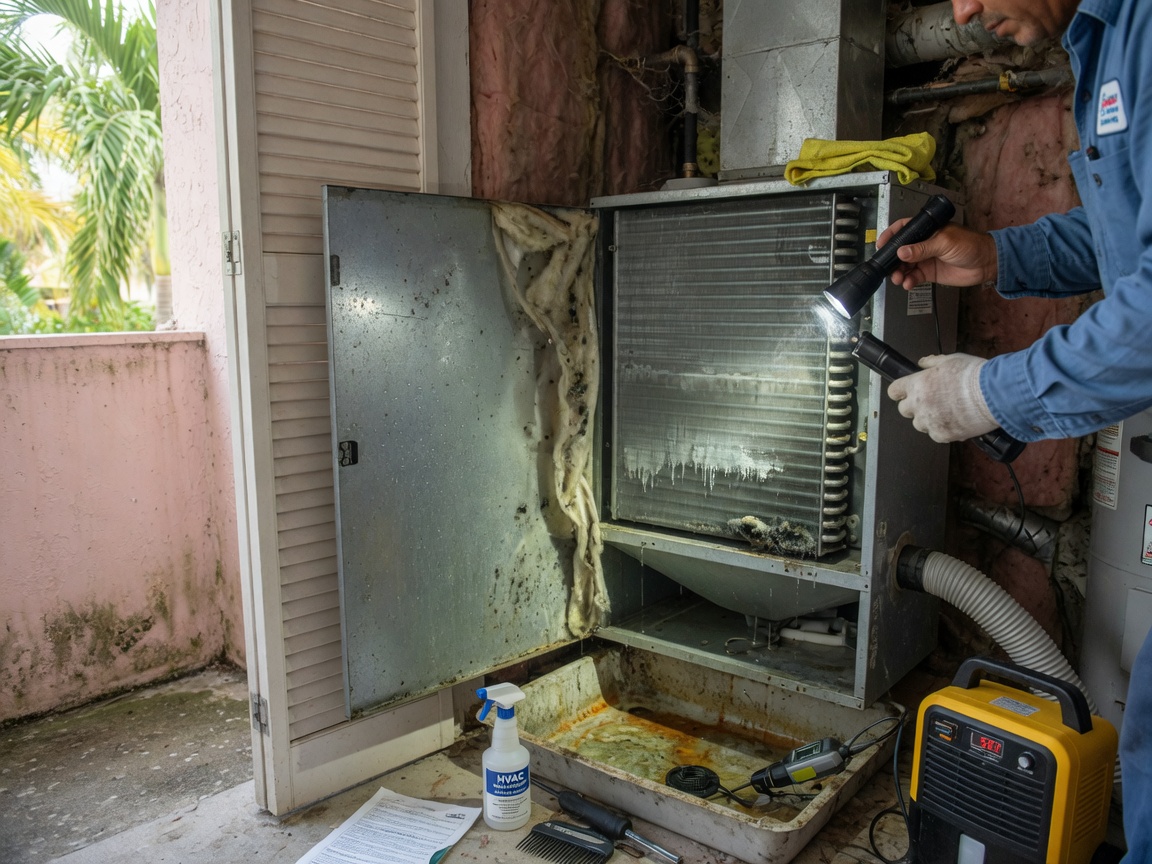
In Cape Coral homes, changing air handler filters every 30-60 days during summer and scheduling annual coil cleaning stops mold growth before it starts. Lee County's tropical climate brings consistent moisture that settles on evaporator coils and drain pans when airflow slows or temperatures drop at night.
Why Cape Coral Humidity Fuels Mold in Air Handlers
Cape Coral sits in Lee County where summers often push 90-plus degrees with high humidity levels that keep indoor air above 60 percent relative humidity for weeks. Homes in Downtown Cape Coral, Cape Coral Isles, and Burnt Store neighborhoods typically feature older ductwork and air handlers installed in attics or garages that trap condensation. When the system cycles off during dry winter months, residual moisture on coils still supports spore growth if the drain line clogs from algae common in Florida water. This pattern repeats across nearby Fort Myers and North Fort Myers where similar housing stock ages 15-25 years without updated dehumidification. Regular checks on the condensate pump and pan prevent water from sitting and feeding mold colonies that then circulate through supply vents.
Common Signs of Mold Inside Your Air Handler
Homeowners notice musty odors strongest when the system first starts in the morning or after sitting overnight. Dark spots or fuzzy growth appear on the coil fins or around the drain pan when the access panel is removed. Reduced airflow or uneven cooling in rooms often signals restricted passages from mold buildup on the blower wheel. In Cape Coral's humid conditions, these signs show up faster than in drier inland areas because moisture never fully evaporates between cycles. Checking the filter for dark discoloration every two weeks during peak summer gives an early warning before spores spread to living spaces.
Step-by-Step Maintenance to Block Mold Growth
Start by turning off power at the breaker and removing the filter to inspect for moisture or discoloration. Clean the drain line with a mixture of one part bleach to ten parts water every 90 days to clear algae that blocks flow in Lee County homes. Use a no-rinse coil cleaner on the evaporator during the annual visit to dissolve organic matter without leaving residue. Replace the filter with a MERV-8 or higher pleated model sized exactly to the return opening to maintain proper velocity. Ensure the condensate drain slopes at least one inch per eight feet and test the safety switch that shuts the system down if water backs up. These steps, performed consistently, keep relative humidity inside the handler below the 60 percent threshold where mold thrives.
For deeper airflow and humidity control, see How High Humidity Affects Ac Performance In Cape Coral Homes.
When to Call a Local HVAC Technician
If odors persist after filter changes or water stands in the pan, contact a technician for coil removal and thorough cleaning. Technicians serving Cape Coral can access hard-to-reach attic units common in Burnt Store homes and verify blower wheel balance that prevents moisture collection. They also check refrigerant levels because low charge drops coil temperature below dew point and increases condensation. Schedule service Monday through Friday 8am-6pm or Saturday 9am-2pm at 3046 Del Prado Blvd S, Ste 1B2, Cape Coral, FL, 33904. Pairing these visits with Preventive Maintenance catches small issues before they require full component replacement.
Readers dealing with short cycling that worsens moisture issues can review Common Causes Of Ac Short Cycling During Cape Coral Summers.
Adding an Indoor Air Quality Solutions assessment helps identify whether a whole-home dehumidifier would reduce the load on the air handler in high-humidity months.