2026-09-05 · Carlos Mendoza
Signs Your Evaporator Coil Needs Cleaning After Rainy Season
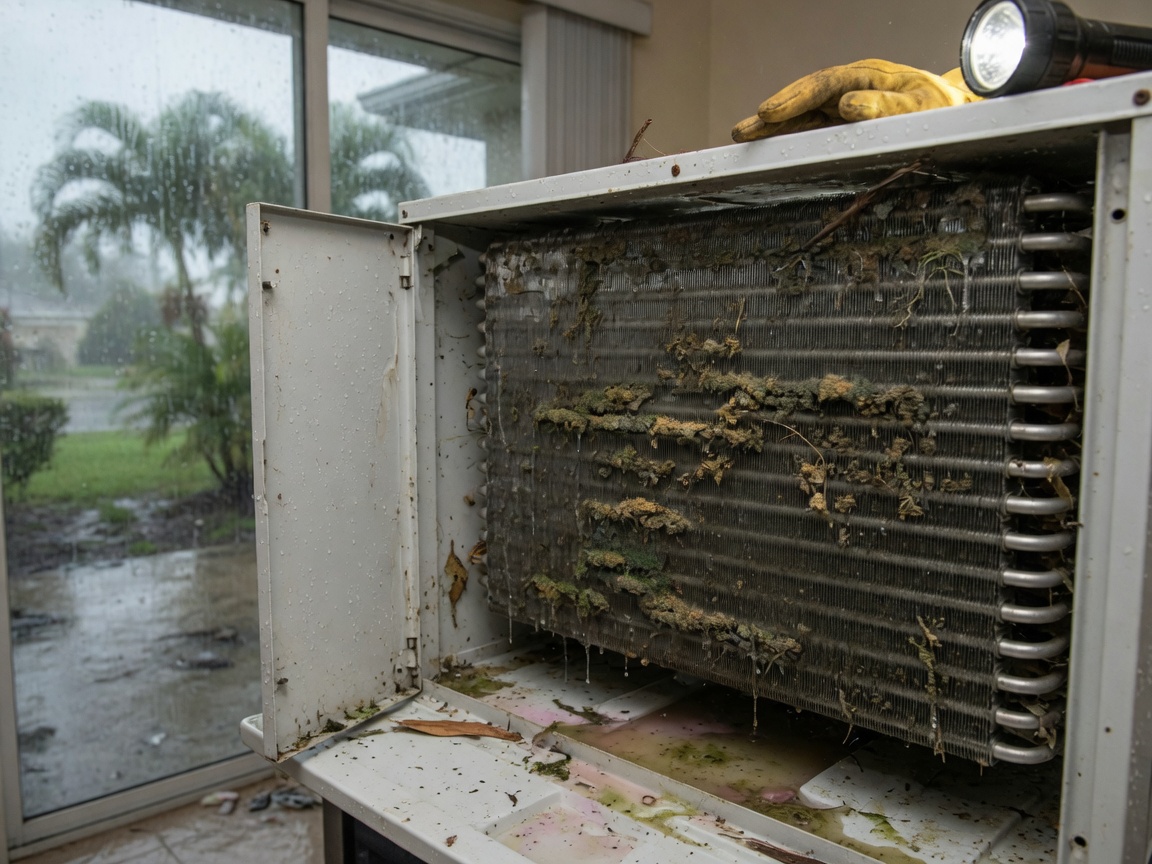
After Cape Coral's rainy season, reduced cooling output combined with visible frost on the indoor unit signals your evaporator coil needs cleaning within 7-14 days to avoid compressor strain. In Lee County homes, the shift from daily downpours to drier winter air leaves behind mineral deposits and mold that restrict airflow across the coil fins.
Reduced Airflow from Clogged Fins
Homeowners in Downtown Cape Coral and Cape Coral Isles often notice weaker air from vents once the rainy season ends. The combination of high humidity and wind-blown pollen during summer storms packs the coil with a sticky film that cuts airflow by 30-40 percent. Older single-story concrete block homes common in these neighborhoods trap that reduced airflow longer because duct runs sit in hot attics. Technicians see the same pattern in Burnt Store properties where larger lots mean longer duct runs that compound the restriction. Checking the filter first rules out simple blockage, but persistent weak airflow after replacement points directly to the coil. Regular preventive maintenance catches buildup before it forces the blower motor to work harder and shortens equipment life.
Ice Formation on the Evaporator Coil
Ice appearing on the suction line or coil cabinet after the rains stop indicates restricted heat transfer from dirt and algae. In Cape Coral's tropical climate, the coil runs colder than design during humid periods, and any airflow reduction drops surface temperature below freezing once the system cycles back on. Residents near Four Freedoms Park report this most often because prevailing winds carry extra moisture from the river. When ice melts it drips into the drain pan and can overflow if the line is already partially clogged from summer debris. Ignoring the ice leads to water damage on ceilings and warped flooring in slab-on-grade homes typical throughout Lee County. A quick visual inspection through the access panel after the unit has run for ten minutes reveals the problem before it escalates.
Rising Indoor Humidity Levels
Cape Coral homes feel stickier indoors even as outdoor humidity drops because a dirty evaporator coil no longer removes moisture effectively. The coil's primary dehumidification role suffers when fins are coated, leaving relative humidity above 55 percent in living spaces. This condition shows up first in Cape Coral Yacht Club area condos where smaller square footage makes humidity changes more noticeable. Linked closely to overall AC performance, the issue mirrors patterns discussed in how high humidity affects AC performance in Cape Coral homes. Short cycling often follows as the thermostat senses the wrong temperature, a problem also covered in common causes of AC short cycling during Cape Coral summers. Measuring humidity with an inexpensive meter confirms whether the coil is the culprit.
When to Schedule Professional Cleaning
Schedule service if two or more of the above signs appear together, especially in homes built before 2000 where original ductwork in Burnt Store and Cape Coral Isles tends to collect more debris. A thorough coil cleaning restores capacity without replacing the unit, which typically lasts 12-15 years in Lee County's salt-air environment. Technicians at Grace Heating & Cooling Services LLC, located at 3046 Del Prado Blvd S, Ste 1B2, Cape Coral, FL, 33904, perform this work Monday through Friday 8am-6pm and Saturday 9am-2pm. Addressing the coil promptly prevents higher repair costs later and keeps systems running efficiently through the drier winter months ahead.