2026-09-05 · Carlos Mendoza
Winter Maintenance Tips For Heat Pumps In Mild Cape Coral Winters
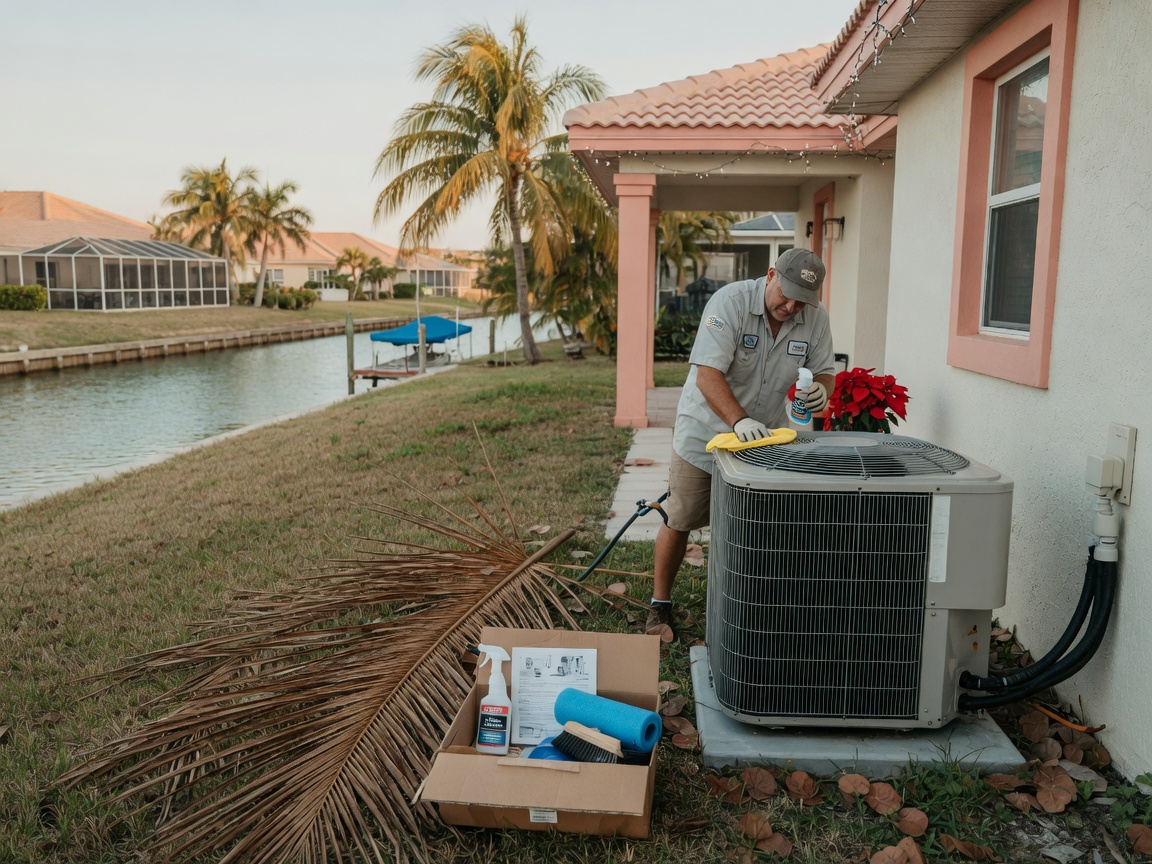
Heat pumps serving homes in Downtown Cape Coral and Burnt Store areas run efficiently through the region's dry winters but benefit from targeted checks every 4–6 weeks to prevent reduced airflow or minor icing on coils during overnight drops into the 50s. Regular attention to filters, coils, and settings keeps systems operating at peak levels without the heavy strain seen in colder climates farther north.
Understanding Local Winter Conditions for Heat Pumps
Cape Coral's tropical climate brings dry winters with lower humidity than summer months, which reduces typical moisture-related issues but can allow dust and salt air from nearby waterways to accumulate faster on outdoor components. Homes in Cape Coral Isles often feature older ductwork that benefits from consistent airflow monitoring to avoid uneven heating on cooler evenings. Lee County properties near the water experience slightly higher corrosion risks on metal parts compared to inland spots in Fort Myers. These patterns mean owners should focus on debris removal and basic visual inspections rather than heavy winterization steps used in northern states. Checking refrigerant lines for insulation wear helps maintain efficiency when temperatures dip below 60°F at night.
Inspecting and Replacing Filters
Dirty filters restrict airflow and force heat pumps to work harder even in mild conditions, leading to higher energy use during the dry season. Homeowners should examine filters monthly and replace them every 30–60 days using 1-inch or 2-inch pleated models suited to local humidity levels. In areas like Burnt Store, pollen from nearby vegetation adds to buildup, making this step especially important for consistent performance. Neglecting filters can shorten component life by 2–3 years in coastal Lee County homes. Always turn the system off before removal and ensure the new filter fits snugly to prevent bypass air.
Caring for Outdoor Units
Outdoor condensers in Cape Coral face exposure to leaves, sand, and occasional storm debris throughout the dry winter months. Clear at least 2 feet of space around the unit and rinse coils gently with a garden hose on low pressure to remove salt residue without bending fins. Properties near Four Freedoms Park or the Cape Coral Yacht Club often see more airborne particles from traffic and water, requiring more frequent visual checks. Avoid covering the unit completely, as trapped moisture can lead to corrosion when humidity rises again. Protecting Outdoor Condenser Units From Landscaping Debris In Cape Coral offers additional steps tailored to local conditions.
Monitoring Thermostat and System Settings
Set thermostats to 68–72°F during occupied hours in winter to balance comfort and efficiency without overworking the heat pump. Programmable models allow automatic setbacks of 4–6 degrees overnight, which suits the mild Cape Coral climate and reduces runtime by 10–15% in typical Lee County households. Check that the system switches correctly between heating and any auxiliary modes during rare cooler snaps. Residents in Sanibel or North Fort Myers often pair this with smart thermostats for remote monitoring when away. Consistent settings prevent short cycling that stresses reversing valves over time.
Scheduling Professional Inspections
A yearly tune-up before December helps identify worn capacitors or low refrigerant levels that affect winter performance in local heat pumps. Technicians can clean coils, test electrical connections, and verify defrost cycles suited to the area's dry winters. Preventive Maintenance visits catch small issues before they require Heat Pump Repair. Homes built in the 1990s and 2000s common across Cape Coral benefit from these checks to extend equipment life to the typical 10–15 year range. Choosing Between Repair And Replacement For Aging Units In Cape Coral explains when repairs make sense versus full replacement in the local market.