2026-09-05 · Carlos Mendoza
Understanding Energy Use Spikes During Peak Cooling Months In Cape Coral
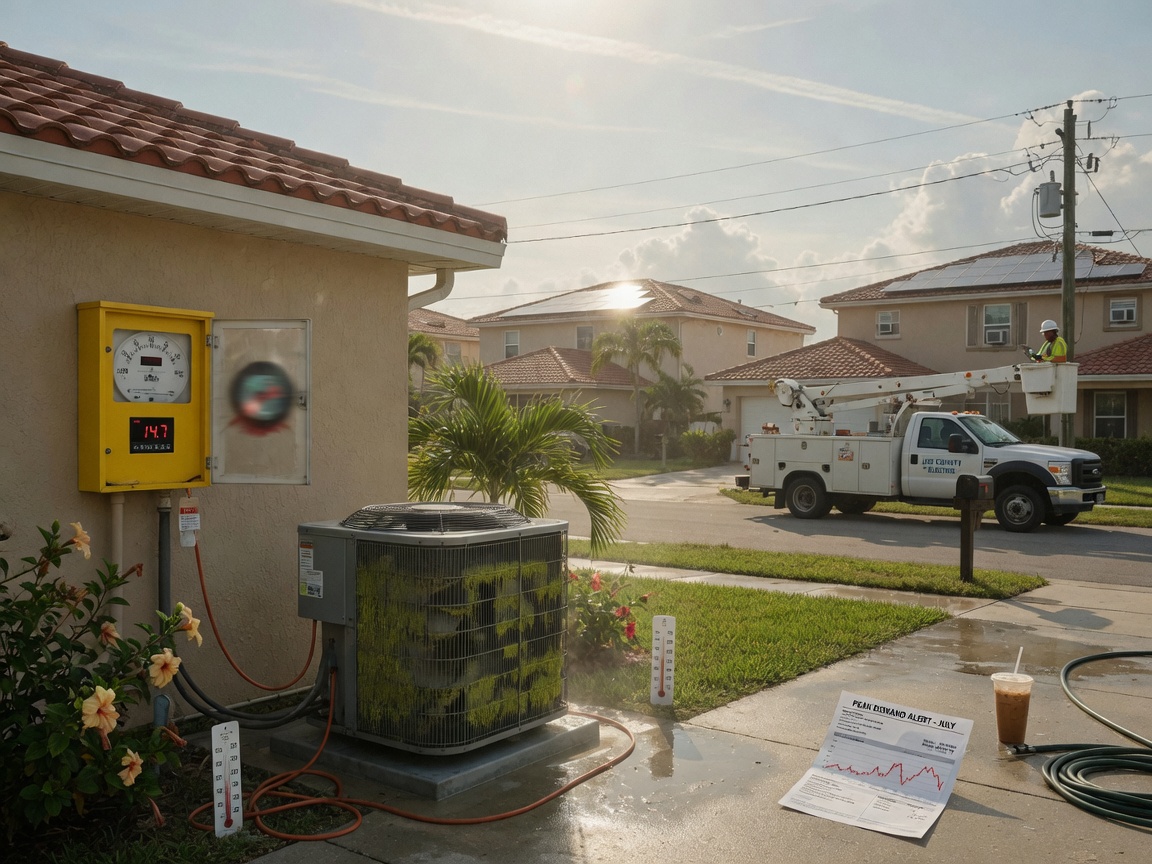
In Cape Coral, energy use for cooling typically rises 30 to 50 percent during peak summer months as the tropical climate brings sustained high humidity and temperatures that keep systems running longer each day.
How Cape Coral's Climate Drives Summer Spikes
Lee County experiences hot humid summers that begin in May and stretch into October, with dew points often staying above 70 degrees. This forces air conditioners to remove large amounts of moisture in addition to lowering temperatures, extending compressor cycles. Homes in Downtown Cape Coral and Cape Coral Isles built before 1990 often have single-pane windows and minimal attic insulation, so the same outdoor conditions create larger indoor heat gains. The result is longer daily runtime and higher kilowatt-hour totals on utility bills compared with the drier winter months when systems sit idle for weeks.
Housing Stock and Terrain Factors in Lee County
Many residences along Burnt Store and near the Cape Coral Yacht Club sit on slabs with ducts in unconditioned attics or crawl spaces exposed to attic temperatures that exceed 120 degrees. Older ductwork in these neighborhoods develops gaps that allow humid air infiltration, making the evaporator coil work harder. Soil in the area retains moisture year-round, which can raise crawl-space humidity and increase latent load on the equipment. These site-specific conditions turn what would be a moderate load in a newer Fort Myers subdivision into a sustained high-draw situation for months.
Equipment Runtime and Maintenance Realities
Systems in Cape Coral often run 12 to 16 hours per day at peak, compared with 6 to 8 hours in shoulder months. Without regular preventive maintenance, dirty coils and low refrigerant levels further extend those cycles. Homeowners notice the difference first in July and August when afternoon thunderstorms briefly drop temperatures but leave humidity levels elevated, preventing the unit from cycling off. Checking filter condition every 30 days during this window prevents the extra strain that shows up as larger monthly bills.
When Spikes Signal the Need for Repairs
A sudden jump beyond normal summer patterns can indicate failing capacitors, low refrigerant, or restricted airflow from clogged filters. In homes near Four Freedoms Park or Sun Splash Family Waterpark, where afternoon sun exposure is high, these issues appear earlier in the season. Linking to deeper discussions on humidity effects helps explain why high humidity affects AC performance in Cape Coral homes. Addressing the root cause before August prevents both higher energy costs and potential compressor damage that shortens equipment life.
Practical Steps for Peak-Season Monitoring
Track daily runtime with a simple hour meter or smart thermostat data for two weeks in June to establish a baseline. Compare readings after heavy rain events common in Lee County to see how moisture loads change consumption. If bills rise faster than neighboring homes in North Fort Myers or Sanibel, schedule an inspection focused on duct leakage and coil cleanliness. These targeted checks, rather than blanket upgrades, keep energy use aligned with actual weather demands without unnecessary expense.