2026-10-28 · David Hale
How To Spot Refrigerant Issues Early In Coastal Florida Homes
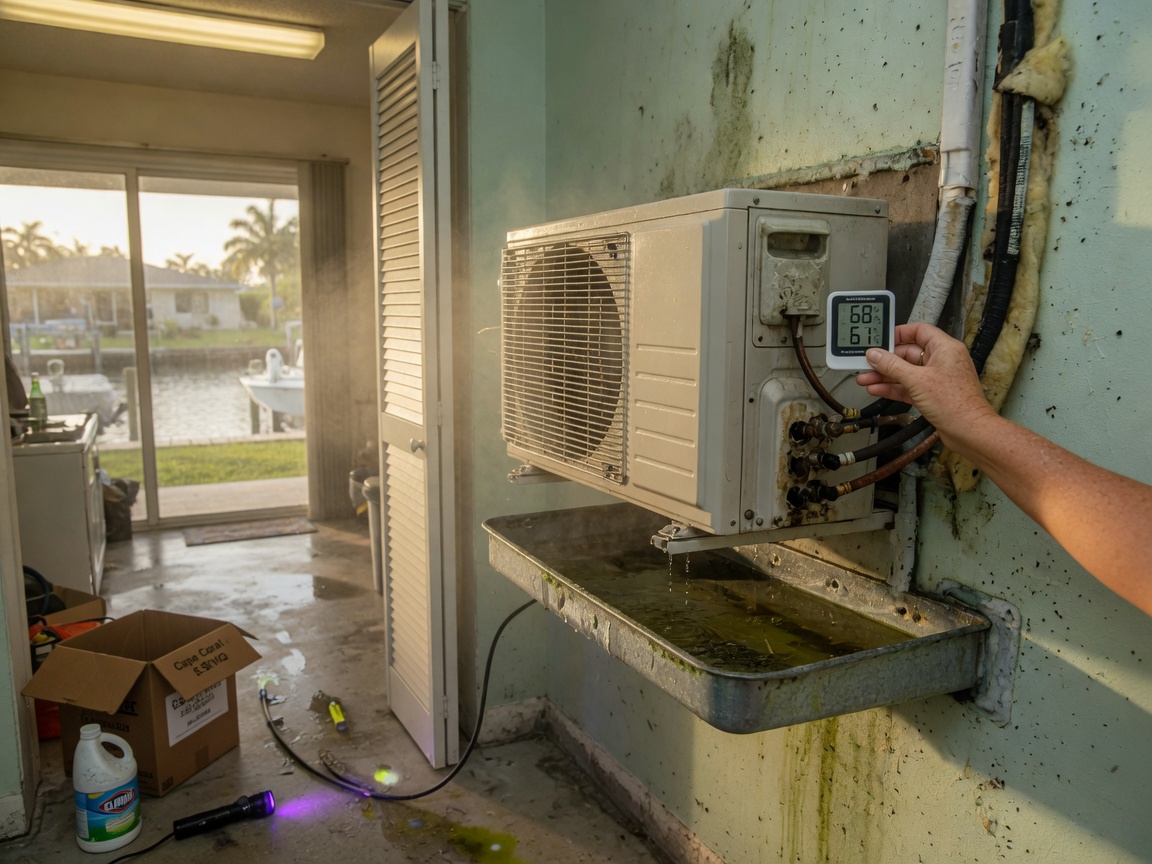
In Cape Coral homes, early refrigerant issues often appear as ice forming on the evaporator coil or suction line, higher monthly electric bills, and noticeably weaker airflow from vents even when the system runs continuously. These signs surface quickly in the tropical climate where hot humid summers push units hard from May through October. Salt air from the Gulf and nearby waterways like those around Cape Coral Isles speeds up corrosion on copper lines and coils, especially in older housing stock found in Downtown Cape Coral and Burnt Store neighborhoods. Homeowners who catch these changes before the compressor fails can often avoid full system replacement.
Impact of Coastal Climate on Refrigerant Lines
Cape Coral’s hot humid summers combined with dry winters create constant expansion and contraction in refrigerant lines, leading to small leaks at joints and flare fittings. The salty air near Four Freedoms Park and the Cape Coral Yacht Club accelerates pitting on outdoor condensers, allowing refrigerant to escape faster than in inland areas like Fort Myers. Homes in Cape Coral Isles often sit on slabs with limited shade, so afternoon sun adds extra heat load that masks early efficiency drops until bills climb noticeably. Dry winter months reduce overall runtime but allow corrosion to continue unchecked on exposed lines. Regular visual checks after heavy summer rains help spot oil stains around connections before a complete loss occurs.
Visible and Performance-Based Warning Signs
Homeowners should inspect the outdoor unit monthly for oily residue around service valves or base, which indicates escaping refrigerant mixed with compressor oil. Inside, check the air handler filter access for frost buildup on the coil during peak humidity periods common in Lee County. Weak cooling in upper floors of two-story homes in Burnt Store often points to low charge affecting the metering device. Listen for hissing sounds near the evaporator during startup, a common early clue before short cycling begins. Track energy use against previous summers; a sudden 20-30 percent increase without added square footage usually signals a leak rather than normal wear.
Steps for Early Detection in Local Homes
Turn the system off and remove the filter to visually examine the evaporator coil for ice or uneven frost patterns after running for 15 minutes on a humid day. Use a handheld thermometer to measure supply and return air temperatures; a difference below 15 degrees often means insufficient refrigerant. Walk the perimeter of the condenser and look for bent fins or debris that traps moisture and promotes corrosion in the coastal environment. Note any musty odors from vents, which can accompany low refrigerant allowing excess humidity to remain in the ducts. These checks take under 30 minutes and fit easily into routines for residents near Sun Splash Family Waterpark who already maintain outdoor equipment.
Connecting to Professional Evaluation
When signs point to low refrigerant, schedule service through air conditioning repair rather than attempting recharge yourself, as federal regulations govern handling. Technicians can perform a leak search with electronic detectors and nitrogen pressure testing suited to the older copper lines common in Cape Coral construction. Pairing this with preventive maintenance catches issues before they reach the compressor. Readers dealing with short cycling may also find value in common causes of AC short cycling during Cape Coral summers. For units approaching typical replacement age, review choosing between repair and replacement for aging units in Cape Coral to weigh options based on leak location and overall condition.
Grace Heating & Cooling operates from Cape Coral, FL with hours Monday through Friday 8am to 6pm and Saturday 9am to 2pm.