2026-09-05 · Carlos Mendoza
How To Check Thermostat Placement For Accurate Readings In Cape Coral
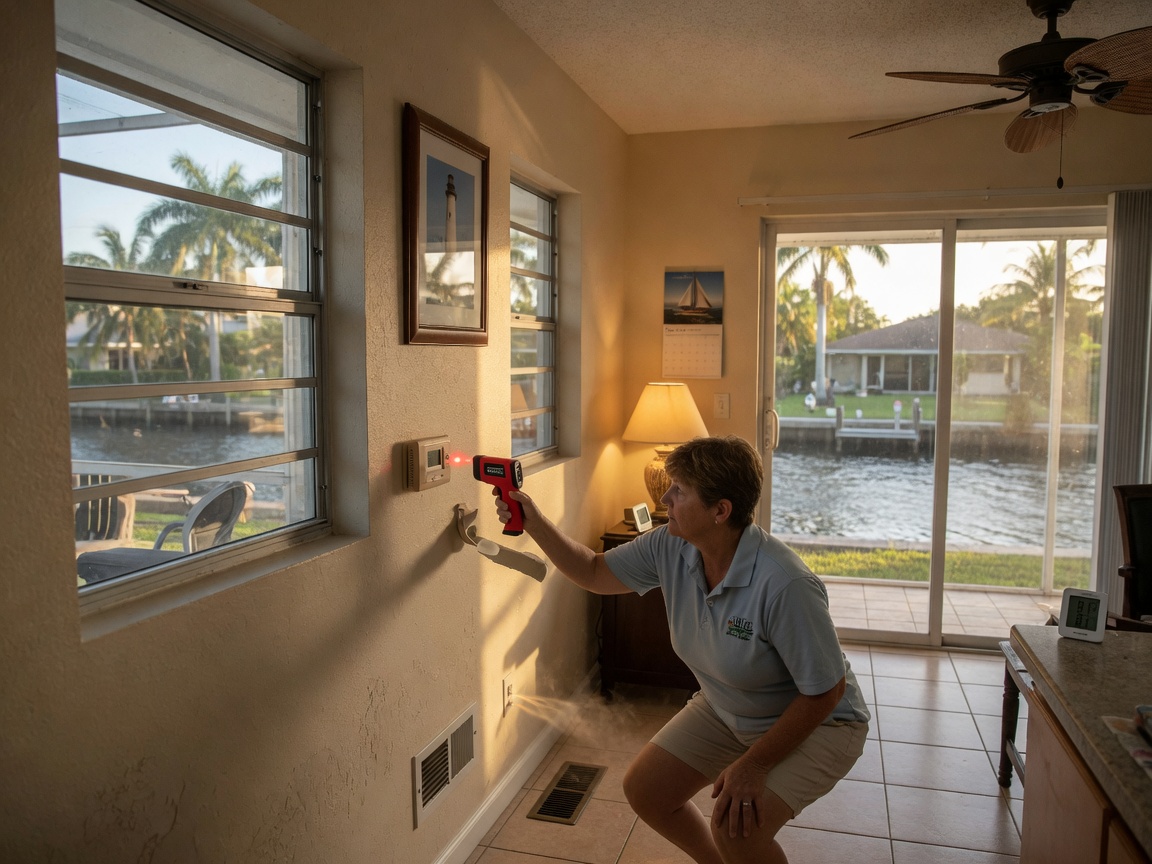
To check thermostat placement for accurate readings in Cape Coral, confirm it sits on an interior wall at least 5 feet above the floor and 5 feet from exterior doors, windows, or supply vents that cycle cooled air during peak humidity months.
Why Placement Matters in Cape Coral's Tropical Climate
Cape Coral's hot humid summers and dry winters create constant temperature swings that make even small placement errors cause the air conditioner to run longer than needed. Homes in neighborhoods like Cape Coral Isles and Burnt Store often feature single-story layouts with large windows facing the water, so thermostats near glass pick up radiant heat and trigger unnecessary cooling cycles. Lee County soil and high water tables also mean many older properties have concrete slabs that retain moisture, affecting how indoor air feels versus what the thermostat senses. Placing the unit near kitchen exhausts or laundry rooms adds another layer of false readings from steam and appliance heat. Checking placement once a season prevents these mismatches and keeps energy use steady through the long cooling period.
Common Placement Mistakes in Local Homes
Many Cape Coral homes built before 2000 locate thermostats in hallways that receive direct airflow from returns or near the Cape Coral Yacht Club area where afternoon sun angles hit west-facing walls. In Downtown Cape Coral and Four Freedoms Park neighborhoods, open floor plans often put the device within 3 feet of sliding glass doors that stay open during milder winter days. Sun Splash Family Waterpark visitors and nearby residents frequently report thermostats mounted above baseboard heaters or on exterior walls that warm up after sunset. These spots cause the system to read 3–5 degrees warmer than actual room conditions, especially when humidity lingers above 70 percent. Avoiding these locations keeps readings consistent across rooms served by the same unit.
Step-by-Step Check Process
Begin by standing at eye level with the thermostat and noting its distance from the nearest supply vent or exterior wall. Next, observe airflow patterns during a typical afternoon when outdoor temperatures exceed 85 degrees and confirm no direct sun reaches the sensor between 10am and 4pm. Use a separate digital thermometer placed 6 feet away on the same wall to compare readings over 30 minutes. If the difference exceeds 2 degrees, relocate the unit to an interior wall away from doorways that open to screened porches common in Burnt Store. Test again after relocation by running the system for one full cycle and logging both readings. Repeat the check after any duct cleaning or air conditioning repair to verify the change holds.
Residents in North Fort Myers and Sanibel who share similar construction can apply the same steps when visiting Cape Coral properties. For persistent accuracy issues after placement adjustments, review the related guide on common causes of AC short cycling during Cape Coral summers to rule out other system factors.
When to Consider Professional Adjustment
If the thermostat continues to show inconsistent readings after repositioning, contact a local technician familiar with Lee County humidity loads rather than attempting further DIY moves. Older homes in Cape Coral Isles often have limited interior wall space, requiring minor wiring extensions that only trained crews handle safely. A service visit also allows inspection of the existing unit's age and compatibility with current equipment. When replacement becomes necessary, the team at Grace Heating & Cooling Services LLC can evaluate options during regular business hours at 3046 Del Prado Blvd S, Ste 1B2. See the page on thermostat replacement for details on compatible models that handle local conditions. Homeowners in Fort Myers facing similar issues may also find the post on understanding energy use spikes during peak cooling months in Cape Coral useful for broader system insights.